YOU HAVE JUST ENTERED THE KINGDOM OF ITALIAN FLORA AND FAUNA
Right after reading about the geography of the country, you must be wondering about the plants growing there and the inhabitant animals of the country. You are on the right track to unveil your answer.
FLORA

The flora of Italy was traditionally estimated to comprise about 5,500 vascular plant species. However, as of 2004, 6,759 species are recorded in the Data bank of Italian vascular flora. Geobotanically, the Italian flora is shared between the Circumboreal Region and Mediterranean Region. According to the index compiled by the Italian Ministry for the Environment in 2001, 274 vascular plant species are protected.
The native vegetation of Italy reflects the diversity of the physical environment: the differences in geology, the differences of altitude above sea level and the diversity of the climate between the continental and the peninsular Italy. The species of plants present in Italy belong to the flora of the continental Europe or the Mediterranean flora.
Broadly, there are three different zones of forests or bushes in Italy:
 1.EVERGREEN VEGETATION: Known as Macchia Mediterranea in Italian, it is filled with densely growing plants and shrubs that always have leaves on them. This flora is typical of the dry Mediterranean climate, especially along the coast and in the islands. The most common plants are olives, argumes, maritime pines and cork oaks to name a few.
2.BROAD-LEAVED VEGETATION: It is typical of the mountain region with a humid climate. The most common plants are Castanea sativa, Fagus sylvatica, the relicts Pinus mugo and Pinus nigra var. There are also a high number of endemic species increasing at higher elevations. Alpine species include Gentiana invalis, Androsace alpina, Polygala chamabuxus, and Carlina acaulis.
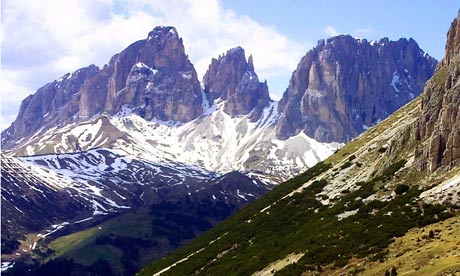 3.CONIFEROUS VEGETATION: It is an evergreen vegetation typical of the Alps and of a few high Apennines areas. The most common plants present in this phytoclimatic area are Picea abies, Abies, Larix decidua and Pinus sylvestris.
There are also plant associations almost treeless: grasslands, pastures, deserts. In the mountains, gradually, the forest turns into mountain pastures, scattered in various shrubs and dotted with small colourful flowers. Higher up, you reach the mountain grasslands and even areas similar to a desert because they have no or almost no vegetation.
Due to the long phase of settlement of the Italian peninsula and the strong Roman high culture, the natural vegetation and forests in Italy were destroyed very early. Crops, pastures and vineyards replaced the natural vegetation. Nevertheless, one of the hallmarks of today's Italy was established by man - who could imagine Tuscany without olive groves, cypresses, pines and vineyards. A textbook example of an idyllic landscape - but shaped by man. Besides the three plant species that are found nearly everywhere in Italy (holly, cork oak and pine), original species of vegetation have been preserved mainly in the more remote border areas.
With this comes the end to the description about the plant kingdom. Now, let's move ahead to the kingdom of animals.
FAUNA
Italy has one of the highest levels of faunal biodiversity in Europe with over 57,000 species recoded (more than a third of all European fauna).
This is due to Italy's
- Southerly geographical position, surrounded by the Mediterranean and Aegean seas.
- Varied geological structure.
- High mountain ranges, especially the Alps and Apennines.
- Climate and habitat diversity- very broadly Alpine in the North, woodlands and river systems in Central Italy and Garigue and Maquis shrub land in the South.
- High plant diversity.

The checklist of the species of the Italian fauna includes 4777 endemic animal species. Unique mammals include Corsican hare, Sardanian long-eared bat, the Apennine shrew and the Sadinian deer. Endemic fish include the Bergatino loach, the Italian barbel, the brook chub Arno goby, thr Garda carp and the Timavo sculpin.
 |
| Mouflon |
There are 102 mammal species in Italy. Some of the species are Alpine Marmot, forest dormhouse and Schreiber's bear. Notable large mammals are the Eurasian lynx, mouflon, and the rough-toothed dolphin.
_small.jpg/190px-Luscinia_svecica_tom_(Marek_Szczepanek)_small.jpg) |
| Bluethroat |
Italy has recorded 516 species of birds. Notable birds are the roller, snow finch, bluethroat and Eurasian nightjar. Italy is an important route for trans-Saharan bird migrants because it is a natural bridge connecting continental Europe to Africa across the Mediterranean.
 |
| Black sea urchin |
Characteristic habitat types of the Italian Mediterranean coastal zone, are the Cystoseira biocenosis and the Posidonia oceanicaseagrass beds. The coralline alga is covered with large gorgonian fans, coral, and a diverse array of often colourful invertebrate organisms and hundreds of species of fish. Amongst the thousand or so species of invertebrates found in the Italian marine environment are zig-zag coral, purple sail and black sea urchin.
 |
| Praying mantis |
Finally, the Italian fauna includes 56213 species of invertibrates. Northern Italy has 33414 invertebrate species. Peninsular Italy has 24197. This may be a faunistic gradient but less complete data are available for southern Italy and the biotopes are very different. The commonly seen insects in Italy are the firebug, cuckoo wasp, praying mantis and rose chafer.
As it was the case with the plants, the wild animals in Italy were almost entirely eradicated. Today, only in isolated enclaves and Natural Parks, native animals such as eagles, ibex, chamois, bears, wolves and marmots can be found. In limited numbers, bears and wolves live now in the wild again - many of them have migrated from neighbouring Slovenia. However, the stocks develop very slowly and are not always welcome.
On the coasts occasionally swordfish and dolphins can be spotted. Even rare species of birds and seals are now back to Italy. Overall, the protection of endangered animals begins to emerge slowly, and as in many other European countries, originally native animals get another chance to settle.

Great article the two of you. Especially after reading about the Geography of Italy in the earlier article, I was eager to know about the fauna in specific and this article made my job easier. The range of animals that can be found through the country is inspiring. It would be such a great experience to see all this in person. Just the photos make person admire their beauty!
ReplyDeleteFrom your article i can make out that you are an animal lover Ushoshi as you have dived in depth to comment about the fauna.
ReplyDeletei never knew abbout birds inveribrae and dolphins. the biodiversity in Italy is skyrocketing aand you have opened the indow to its amazing ecology thanks
Thanks a lot Ushoshi
ReplyDeleteThank you Palak.
ReplyDeleteDid you know that the Italian Wolf in the unofficial national animal of Italy! The Italian wolf is said to play a huge role in the legend of the founding of Rome!
Thanks for your generous comments Palak and Radhika.
ReplyDeleteI must add on that it was great working with you, Shreya through this article. Your little inputs did help a lot in making this article look complete. Thanks again in putting up with me in this. I am glad we came out with two totally different articles together for this project.
Delete